SAFETY
importance to ensuringwe catch the small
stuff before it becomes a larger issue.
Given this logic, amore effective goal at
the start of aday, project or thenewyear
wouldbe tonot focus solelyon achieving
zero injuries, orno lost times, but
rather ensuring thought accounatability
measures that training is conducted,
checks areproperlydone and segments
of thework arepre-planned to abate the
hazards.
On the samepage,whenwe reward
employees for “small” acts of safety
awareness or correct examples,we are
incentivizing thebehaviorswewant
repeated insteadof simplywaitinguntil
the endof a longperiod and rewardingor
punishingbasedon lagging safetymetrics.
In conclusion, conduct your own
research and see if you agree– forme it
makes a lot of sense.
■
19
FEBRUARY 2015
ACT
fewmorewindows. Eventually, theymay
evenbreak into thebuilding, and if it’s
unoccupied, perhaps become squatters or
light fires inside.
Or consider apavement. Some
litter accumulates. Soon,more litter
accumulates. Eventually, people even
start leavingbags of refuse from take-out
restaurants thereor evenbreak into cars.
After this brief research, andmore
that space limitations donot allow for
summarizing, I havediscoveredhow
much, inmyopinion, this principle
applies to effective safetymanagement.
Ifwe look at the areas of success inour
companies, Iwouldventure to say it is a
direct result of our hardwork in the areas
of the “nit-picky stuff” that has fostered
thebiggest successes.As a coupleof
examples:
P
r ide transfers positively
Whenour equipment looksnice and can
easilypassDOT/OSHA inspections, I
know for a fact there ismorepride felt
by theoperator/driver of that equipment.
That prideusually transfers to increased
carewhiledriving andoperating that
equipment, thereby reducing claims.
Whenwe take the time toproperly
perform andhave accountability for
our daily checks and inspections (even
whendocumentation isnot requiredby
regulatory agencies)we are establishing
a cultureof attention todetail that lends
Daniel Erwin
discu
sses
strateg
ies for fixing
safety
problems,
larg
e and small.
I
was recently conducting amock
OSHA inspection for a client.Aswe
walked through the facility, theowner
was veryproud to letmeknowof all the
positive stridesmade in the last coupleof
years.Whenwe finished, I complemented
himonmanypositive areas I noted and
shared the few small, (ornit-picky) items
I hadnoted inmy audit. I sensed the
disappointment in the small items being
noted, andhe shared a viewpoint that
they choose to focus on the “big stuff”
and that the “small stuff”will take care
of itself. This statementmademewonder
what I feelwillmore influence anddefine
a cultureof safety– shouldyou focus
on the “small things”or the “big things.”
I did some research and calledonpast
experiences to at least knowwhere I
stood.
Crime-
fi g
h ting
research
The first research I didwas on thebroken
windows theory. This is a techniqueused
primarily in crime fighting. Thebasic
premiseof the idea is thatwhen the little
things are fixed, repairedor otherwise
shown attention, the culture changes and
thebig things are thereby avoided.A few
notes on the topic are includedbelow.
A successful strategy for preventing
vandalism, according tomy research, is to
fix theproblemswhen they are small and
manageable. Repair thebrokenwindows
within a short time, say adayor aweek,
and the tendency is that vandals aremuch
less likely tobreakmorewindows or do
further damage. Cleanup the sidewalk
everyday, and the tendency is for litter
not to accumulate (or for the rateof
littering tobemuch less). Theproblems
donot escalate.
Consider abuildingwith a fewbroken
windows. If thewindows arenot repaired,
the tendency is for vandals tobreak a
‘‘
W
hichwill more
infl
u
ence and define a
cu
ltu
re of safety:
focu
sing
on the small thing
s or the
big
thing
s?
THEAUTHOR
Daniel Erwin
is
a crane, rigging and
transportation safety
consultant and author.
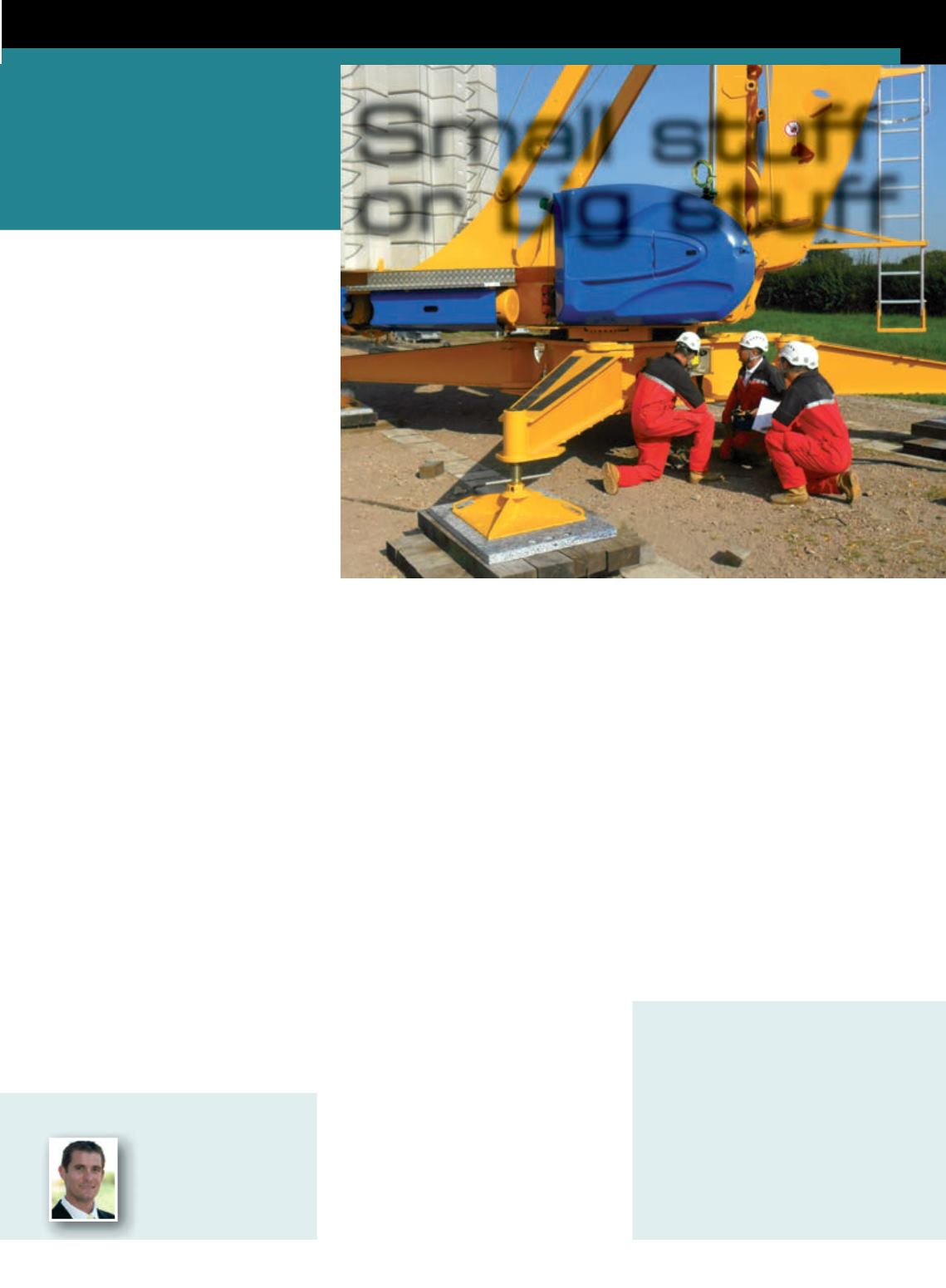
Small stuff
or big stuff


